The Per-Seat Model Is Borrowed Time
I’m a technologist by trade, but the business side of the MSP space has always interested me. I’ve been listening to Dave Sobel’s Business of Tech podcast for a while now, and yesterday’s episode, a repost from a sister publication, the SMB Community Podcast, was very interesting.
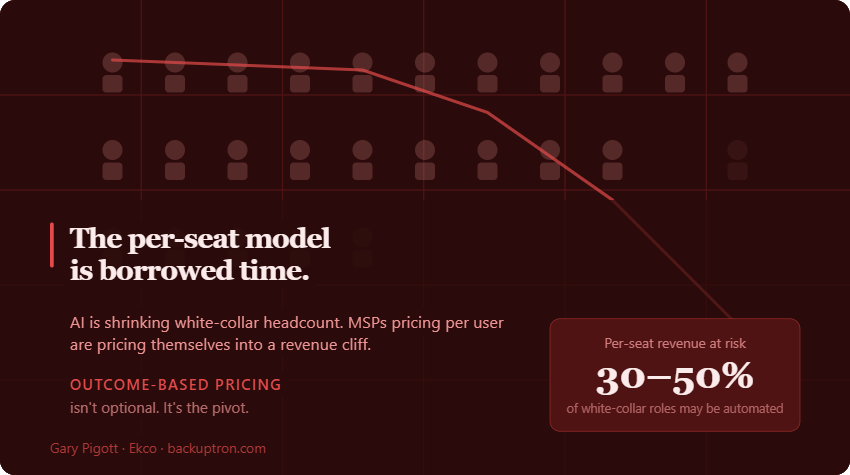
The argument is straightforward, and the implications are uncomfortable: AI could reduce white-collar jobs by 30–50%, and that directly threatens the per-seat AYCE managed services pricing model that has anchored MSP revenue for the better part of two decades.
That’s not a distant forecast. That’s a structural problem arriving faster than most MSPs in the SMB space are prepared for.
We charge per seat because each seat represents a person generating tickets, consuming bandwidth, needing endpoints managed, requiring access controls. Remove the person — or replace them with an AI agent — and the commercial logic collapses. Microsoft’s introduction of Agent365 licenses AI agents rather than human users, and that’s not a coincidence. The vendors are already repricing for a world with fewer people in it. MSPs need to be doing the same.
The challenge is especially acute for MSPs operating in the SMB space. Enterprise customers have enough complexity — infrastructure, compliance, multi-site, hybrid cloud — that there’s always something to bill for regardless of headcount shifts. SMBs are leaner. Fewer seats means lower billables. If a ten-person accountancy firm automates four roles, we’ve just lost 40% of our billing base on that client, with no equivalent replacement.
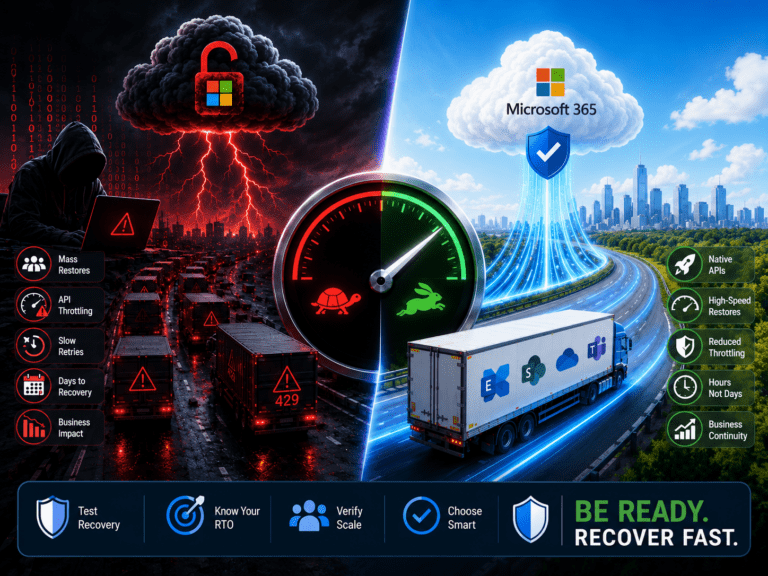
So what’s the alternative? Outcome-based pricing is the direction of travel, but it’s harder to operationalise than it sounds. Charging for uptime, availability, security posture, recovery time objectives — these require us to define, measure, and contractually commit to outcomes rather than simply covering a seat count. It demands better tooling, tighter SLAs, and a more sophisticated commercial conversation with clients who have historically bought IT like a utility.
Vendor-attached outcomes and resilience warranties are already pushing in this direction — some vendors are now offering performance guarantees that require MSPs to standardise on their architecture in exchange for coverage-based commitments. That’s a version of outcome delivery, even if it’s vendor-led and comes with its own lock-in risks.
The MSPs that navigate this well won’t be the ones who figure out how to replace lost seat revenue with clever billing gymnastics. They’ll be the ones who can articulate — and prove — what business continuity, security resilience, and operational uptime are actually worth to a client whose headcount is shrinking. That’s a different kind of value conversation, and frankly, most of us aren’t having it yet.
Worth thinking about now, while there’s still room to move deliberately.