What You Can Prove: Turning a Restore Test Into Evidence
One exercise, three audiences. Turning a restore test into evidence that satisfies an underwriter, a supervisor and your own organisation, without writing it three times.

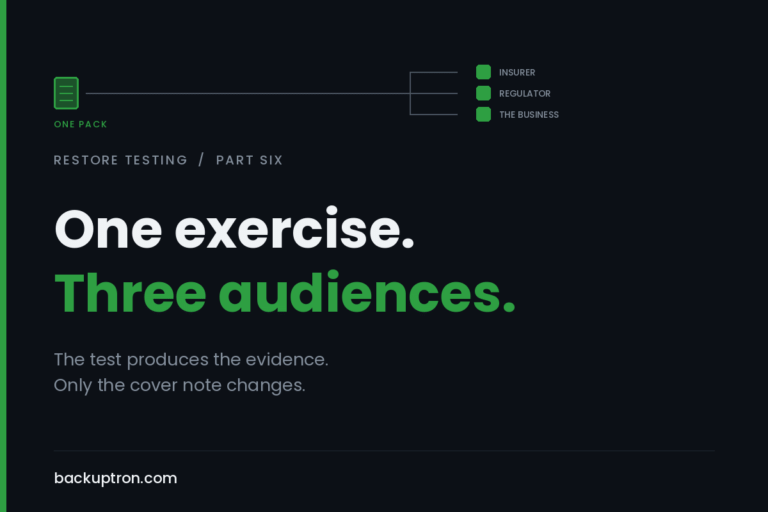
One exercise, three audiences. Turning a restore test into evidence that satisfies an underwriter, a supervisor and your own organisation, without writing it three times.
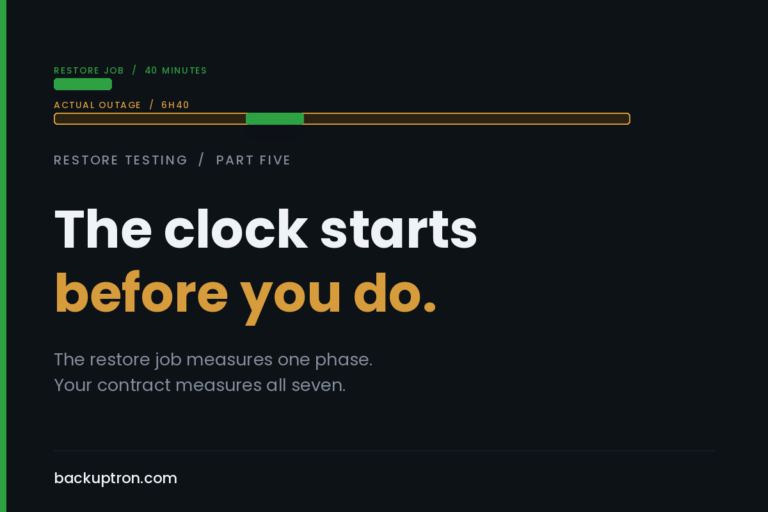
A restore job measures one phase. Your contract measures all seven. Where recovery time actually goes, and what an RTO number looks like when somebody asks you to stand over it.
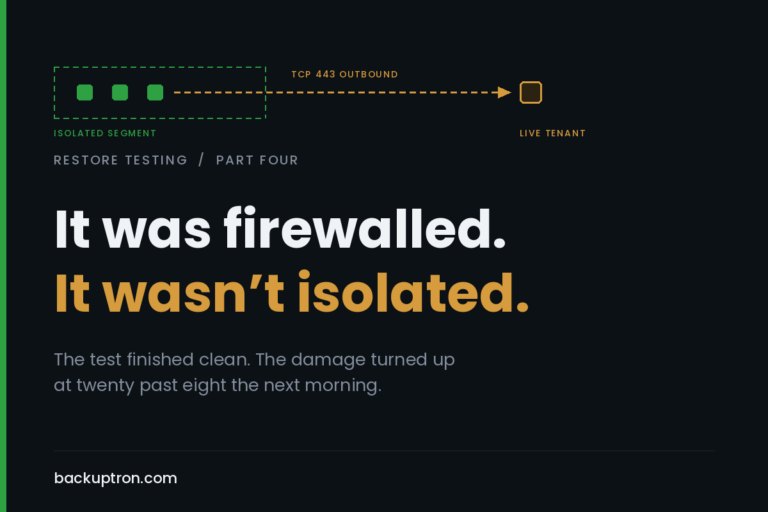
It was firewalled. It was not isolated. A restored directory sync server found outbound 443, reached the live tenant, and pushed a two week old view of the directory into production.
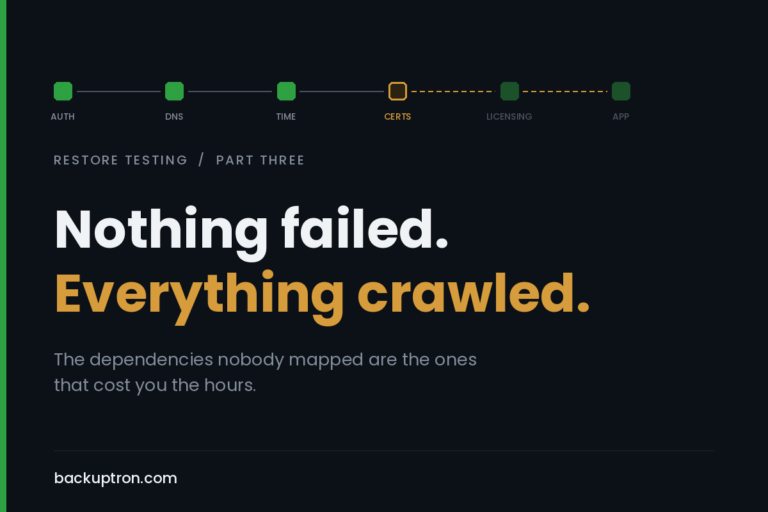
The application came back and then every screen took a minute to load. Certificates, DNS, time, licensing and service accounts: the dependencies nobody maps are the ones that cost you the hours.
Forty minutes to restore the application. Six hours before anyone could log into it. Why identity sits on the critical path for every recovery you will ever run, and what restoring a domain controller actually involves.
First in a six-part series on restore testing. The client described here is a composite, drawn from a few engagements that shared the same shape. The details are real. The organisation isn’t. Every backup article ever written ends the same…